The Noordbrabants Museum acquires *Head of a Woman*

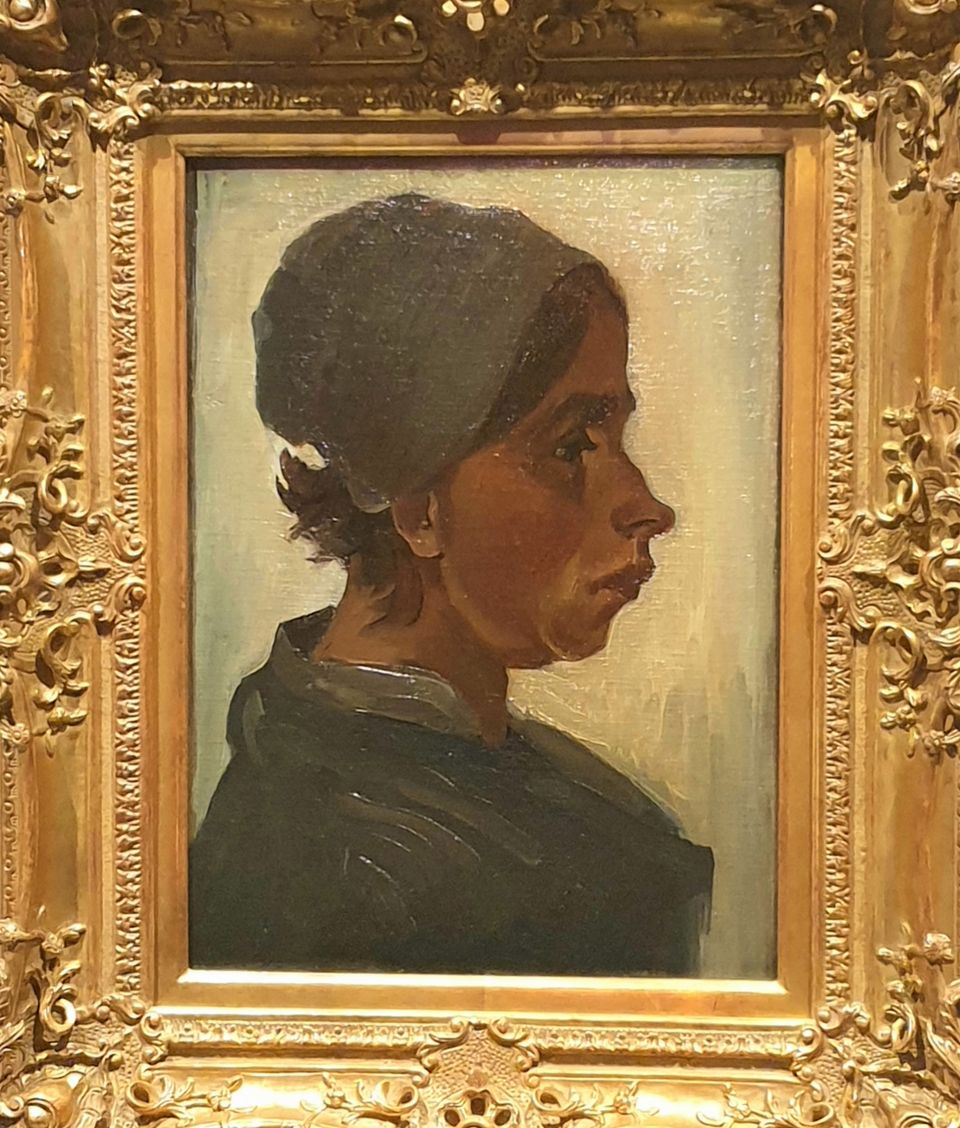
The Noordbrabants Museum has once again succeeded in expanding its steadily growing collection of works by Vincent van Gogh. The museum recently acquired a ‘Head of a Woman’ from the Nuenen area, painted in 1885. The painting was purchased through Christie’s London. The funds for this acquisition were provided by the BankGiro Lottery, private individuals and companies.
A key focus of the policy
Vincent van Gogh occupies a prominent place within the policy of Het Noordbrabants Museum. As a provincial museum with international ambitions, the museum aims to assemble a representative overview of the Brabant-related works of this world-famous Brabant artist. Following three smaller exhibitions in 2015 and 2017, the museum pulled out all the stops in 2019 with the major exhibition *Van Gogh’s Close Circle: Friends, Family, Models*, featuring loans from all over the world.

13 original Van Gogh paintings on display
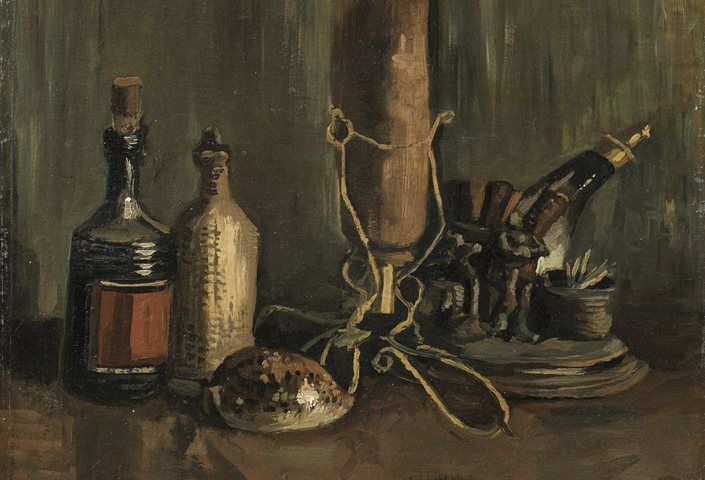
At the end of 2016, the museum acquired the watercolour ‘The Garden of the Vicarage at Nuenen’ (1885); in 2017, the painting ‘Collse Watermill’ (1884) and, in 2018, the painting ‘Still Life with Bottles and a Shell’ (1884). ‘Head of a Woman’ (1885) is the fourth acquisition of a Van Gogh work within a four-year period. With the ‘Peasant Woman Digging’ (1885), acquired in 1984, the museum now owns five works by Vincent van Gogh, in addition to eight on loan. This brings the total number of Van Goghs on display to thirteen.
Practising as a figure painter
The painting ‘Head of a Woman’ forms part of an important series of works produced in Nuenen between November 1884 and May 1885. Van Gogh wanted to become a skilled figure painter and, to this end, produced several dozen ‘head studies’. His progress in this area was reflected shortly afterwards in his masterpiece ‘The Potato Eaters’. Within his Brabant oeuvre, ‘Head of a Woman’ is a relatively colourful work. It is one of the few head studies with a light, coloured background.

Rural scenes
Van Gogh painted various farmers and farm labourers from Nuenen and the surrounding area. With their weathered faces, they epitomised the hard life of farming, close to nature. Van Gogh was particularly interested in models with distinctive facial features. This unknown woman, with her striking appearance, must have appealed to Van Gogh; he depicted her on several occasions. He allowed the contours of her profile to stand out powerfully against the light background. His model’s hair playfully springs up from beneath her bonnet. This powerful painting significantly enhances the collection; the museum did not previously own any portraits.
Generous support
Such a costly acquisition is by no means a matter of course for Het Noordbrabants Museum, certainly not in the current climate. Director Charles de Mooij is therefore impressed by the support the museum receives time and again from its grant-makers and sponsors: ‘As with many acquisitions, this painting was also acquired entirely with external funds: a large part was raised by participants in the BankGiro Lottery. The remaining amount was pledged by sponsors and private individuals who have been supporting the museum for many years. It’s heart-warming!’
Dorine Manson, Managing Director of the BankGiro Lottery: “We are proud that, thanks to the participants in the BankGiro Lottery, we have been able to help make this important addition to the museum’s collection possible. Now that Het Noordbrabants Museum has reopened its doors, we hope that many people will come to admire this wonderful acquisition. Especially in times like these, we believe it is all the more important for people to be able to visit the museum to experience art.”
Expertise of the Van Gogh Museum
Before proceeding with the purchase, the museum asked experts from the Van Gogh Museum to examine the work. In Amsterdam, the painting was examined in detail, using methods such as UV light, X-rays and a microscope. The canvas was also analysed, revealing that it came from the same roll as three other works from Nuenen. On the basis of these positive findings, Het Noordbrabants Museum then began negotiations with the sellers. This led to an agreement in mid-August.
Van Gogh and Brabant
The acquisition of the painting not only enhances the collection of Het Noordbrabants Museum, but also contributes to further raising the profile of Brabant as the ‘Van Gogh province’. The province of North Brabant, through its deputy Wil van Pinxteren (responsible for culture, amongst other things), has therefore expressed its great delight at the purchase.
“It’s wonderful that, for the fourth time in four years, a work by Van Gogh is returning to his birthplace. In recent years, Brabant has invested heavily in a wide range of Van Gogh initiatives, both through the ‘Van Gogh Brabant’ project – co-initiated by the Noordbrabants Museum – and through the Van Gogh Heritage Sites in Nuenen, Zundert and Etten-Leur. The development of the Van Gogh National Park is also in full swing. This provides a significant boost to our joint approach.”
