 Go to the homepage
De Mortelen
The De Mortelen nature reserve and the Heerenbeek Estate
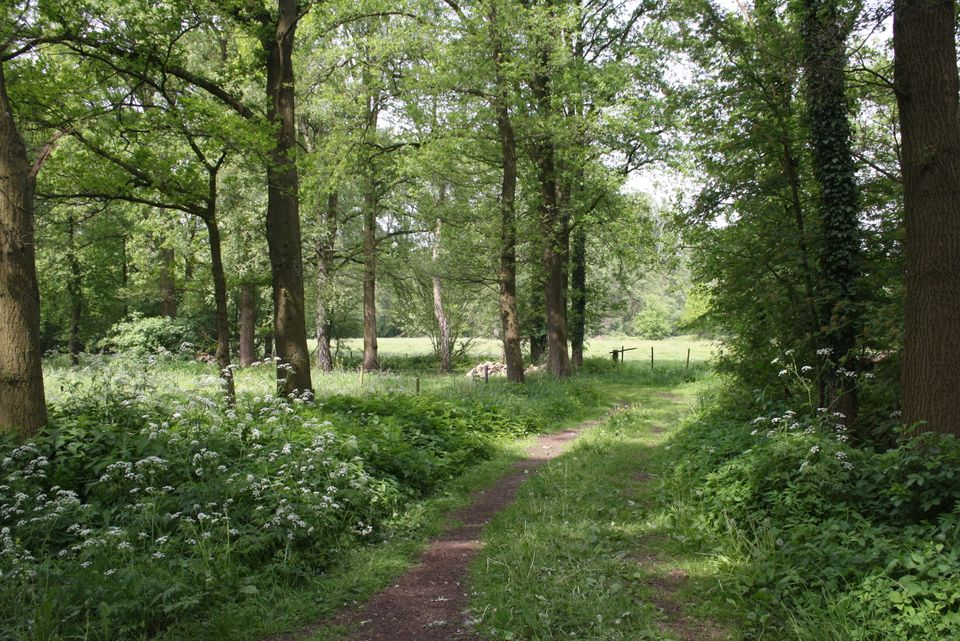
The small-scale De Mortelen nature reserve, part of the Groene Woud. It comprises woods, tree-lined avenues, rugged meadows and hedgerows, as well as ditches and streams, several long-fronted farmhouses and the Heerenbeek Estate. It is owned by Het Brabants Landschap.
Great starting points for lovely walks through the area are the charming outdoor venues Hoeve 1827 and De Vrolijke Jager, both on Oude Grintweg.
History of De Mortelen
The cultural landscape of De Mortelen is unique. Roads and plot boundaries correspond to natural landscape features such as small differences in elevation. Land was cleared in the form of ‘kampjes’: isolated fields amidst wild land with sand mounds (donken). The more recent heathland reclamations in the north of the area are on a larger scale and feature straight plots. This type of heathland afforestation was intended to improve the soil, but much of it was cleared to make way for agricultural land.
Distinctive flora
Wood anemones are typical plants found at De Mortelen. The many damp copses in the cultural landscape are very old and were once used for coppicing. In the undergrowth, on the verges and along watercourses, various rare plant species can be found which bloom profusely in spring. Unusual ferns grow in shaded, damp spots.
Heerenbeek Estate
In 1303, Duke John II of Brabant granted a plot of land in De Mortelen to Parkin Abbey in Leuven. A farmstead was built and the land was cultivated. In the 15th century, the estate was leased out by the abbey.
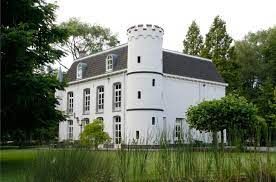
The country house, dating from 1864, is a listed building with white plastered walls and turrets, giving it the appearance of a small castle. In 1998, a fire raged, completely destroying the interior of the house, after which the building was fully restored. It is now privately owned. The driveway leads onto the Oude Grintweg. Along this road lies the family cemetery of the noble De Girard de Mielet van Coehoorn family, who once lived in the country house.
The estate, with its many walking trails, is freely accessible all year round. The garden and the buildings are not open to the public.